Skip to content
  • ACCESS TO PROFESSIONALS

    • English
      • Español
  • Uganda
  • Rwanda
  • Tours
  • Muafrika
  • Agencies
  • About us
  • Contact
  • Bunyoro-Kitara

    The remnants of the Bunyoro-Kitara kingdom constitute what remains of a once powerful empire, now distributed across the current districts of Hoima, Masindi, Kibaale, Kabarole, and Kasese in Uganda, as well as some parts of present-day western Kenya, northern Kenya, and eastern Congo.

    The most renowned king of the Bunyoro reign was Kabalega, who bravely resisted colonial dominance during his rule. However, the Kitara empire dwindled to become practically a depopulated kingdom, a consequence of deliberate marginalization dating back to the colonial era.

    A systematic genocide against the Bunyoro population ensued as a result of the kingdom’s army being severely weakened after King Kabalega was imprisoned and banished to the Seychelles. This genocide was made worse by epidemics and diseases like syphilis.

    The inhabitants of the Bunyoro kingdom, predominantly Christians, are known as Nyoro or Banyoro (singular, Bunyoro). Their primary language is Nyoro (also known as Runyoro). In the past, the economy revolved around hunting elephants, lions, leopards, and crocodiles, but nowadays, agriculture is the main economic activity, with crops including bananas (matoke), millet, cassava, sweet potatoes, cotton, tobacco, coffee, and rice.

    “Omukama” is the title given to the rulers of the central African kingdom of Bunyoro-Kitara, which existed as an independent state from the 16th to the 19th century. Omukama Bunyoro remains a figure of significant importance in the current politics of Uganda, especially among the Banyoro, who still respect him as their true leader.

    The royal palace, also known as the Karuziika Palace, is in Hoim City, where the current king, Solomon Iguru I, resides with his wife, Omugo Margaret Karunga. The present king has a chief of staff, 21 ministers, and a parliament, known as Orukurato.

    During its heyday, the Bunyoro-Kitara kingdom controlled virtually the entire Great Lakes region, including Lakes Victoria, Edward, and Albert. The kingdom possessed sacred sites, such as the current fishing village of Kibiro on Lake Albert, known for its salt deposits and sulfurous hot springs. Their advanced metallurgy provided military and economic power across the Great Lakes region.

    In the late 18th century, the Bunyoro empire began to decline, losing territory to Buganda in the Kooki and Buddu regions. In addition, the province of Toro seceded from the kingdom in the 1830s, depriving it of most of the Kibiro salt mines. To the south, Rwanda and Ankole grew rapidly, moving northwards and absorbing some of the smaller kingdoms that were once Bunyoro’s vassals.

    By the mid-19th century, the Bunyoro empire had been reduced to a small state, though still economically strong due to trade routes on Lake Victoria and ties to the Indian Ocean coast, particularly in the ivory trade. However, conflicts with Buganda led to a tumultuous period, with the capital moving from Hoima to Amparo and two kings reigning simultaneously after the death of Omakuma Kyebambe III.

    Great Britain intervened in 1890, securing control over the northern region of Lake Victoria and establishing a protectorate in 1894. Despite resistance from King Kabalega, who was captured and exiled, part of the kingdom was divided between Buganda and Toro. During World War I, the region remained loyal to the British crown, leading to the signing of a new agreement in 1934, granting greater autonomy.

    Today, the kingdom of Bunyoro remains one of the kingdoms with some decision-making power in Uganda, along with Buganda, Busoga, and Toro.

    In terms of traditions, the Banyoro were traditionally polygamous, and divorce was common. The oldest man, Nyineka, led his family, and W’omugongo Mukuru, an elder chosen by the other village elders, led the community.

    When a baby was born, they were not immediately given a name. Several months would pass before a close relative bestowed a name on them, with the father having the final say. Infants were given two names: their given name and the traditional name Mpako, which was frequently associated with the occasion of the baby’s birth. Regarding beliefs, the Bunyoro associated death with black magic and the occult, performing rituals to prevent the deceased’s ghosts from interfering with the living.
    April 12, 2024
  • Baganda

    The Baganda are the largest individual ethnic group in Uganda, with a rich history and vibrant culture that have left an indelible mark on the country’s central region. Their ancestral territory, known as the Buganda province, encompasses the districts of Kampala, Mpigi, Mukono, Masaka, Kalangala, Kiboga, Rakai, and Mubende, where they have established a deep-rooted presence.

    The Buganda region, formerly known as Muwaawa, which translates to “sparsely populated place,” has been home to the Baganda since ancient times. They are believed to trace their roots back to Abyssinia (Ethiopia), migrating through the Rift Valley and the Elgon mountains, thus establishing a rooted presence in the land they now call home.

    The Baganda people are mainly farmers who raise cattle, sheep, goats, and chickens. In addition to animals, they grow a wide range of produce, such as bananas, sweet potatoes, cassava, yams, beans, and peas. Their mastery of agriculture has been fundamental to their livelihoods and has greatly contributed to the country’s economy.

    In the past, the Baganda were distinguished by their large, flat noses and short, stocky stature. Although these physical features are less prominent today, they reflect the diversity and assimilation capacity of this ethnic group. Over the centuries, the Baganda have incorporated people from other regions and ethnicities into their society, enriching their cultural heritage and diversity.

    Baganda society is marked by a sense of pride and cultural prestige, with a strong belief in the superiority of their culture over that of other peoples in Uganda. This sense of superiority was fostered during the colonial period, when the British favoured them and granted them special status within the protectorate of Uganda, consolidating their position as political and cultural leaders.

    The traditional government of Buganda was centralized around the Kabaka, or king, who held a position of supreme power. However, after 1750, the system evolved into a more decentralized structure, with political influence extending through a network of regional leaders and local administrators. The Kabaka, whose maternal lineage determined his lineage, maintained a central role. Other prominent figures in the kingdom’s governance included the prime minister (Katikkiro), the royal sister (Nalinya), and the queen-mother (Namasole).

    The administrative system was divided into units known as Amasaza (counties), which were further subdivided into Amagombolola (sub-counties) and Emiruka (parishes). These arrangements ensured that authority was distributed fairly and efficiently throughout the region. Although the system of government was largely hereditary, leaders had to demonstrate merit and distinguished service to ascend to positions of authority.

    In conclusion, the Baganda constitute a powerful cultural and political force in Uganda that continues to impact today. Their rich cultural heritage and historical legacy continue to be essential to the formation of national identity and the advancement of the nation.

    April 12, 2024
  • Batooro

    The Batooro, also known as Tooro, constitute a Bantu ethnic group with a population of over a million people in Uganda. They are native to the Kingdom of Toro, a subnational constitutional monarchy. The districts of Kabarole, Kamwenge, Kyegegwa, and Kyenjojo are where they are primarily found. The predominant language among the Batooro is Rutooro, which shares similarities with Runyoro, spoken in the neighbouring Bunyoro Kingdom. The combination of both languages is known as Runyoro/Rutooro.

    The cultural identity of the Batooro is deeply rooted in their ethical and cultural customs, which are reflected in their behaviour, language, and traditions. They value personal dignity and respect for social norms, considering non-compliance with these customs a lack of self-respect. The tribal name “Batooro” is derived from the word “Omutooro,” which means “ceremony,” reflecting the importance of traditions and rituals in their culture.

    The unusual diet of the Batooro people is characterized by taboos around specific foods, including fish, eggs, and birds. Although some of these taboos have faded over time due to the influence of modernity, they have always been an essential part of their cultural identity.

    Regarding nomenclature and personal names, the Batooro have a unique system that combines traditional names with religious names, especially those influenced by Islam and Christianity. Additionally, they practice the Empaako naming system, where children receive an additional name that reinforces social and familial ties within the community.

    Lineage and clans are fundamental to the social structure of the Batooro and are taken very seriously to avoid endogamy. There is a taboo prohibiting marriage between members of the same clan or the maternal clan, with limited exceptions for the royal family.

    In summary, the Batooro are an ethnic group with a rich cultural tradition and a deep connection to their history and customs. Their identity is reflected in their language, dietary practices, naming ceremonies, and clan system, which have continued to be key elements in their daily lives and sense of belonging.

    April 12, 2024
  • Bakiga

    The Bakiga, sometimes also referred to as Kiga, are an ethnic group primarily found in the city of Kabale and parts of the Rukungiri districts, including the counties of Ndorwa, Rubanda, and Rukiga in Kabale, and parts of Kinkizi and Rubando in Rukungiri. Over time, due to overpopulation, they have moved to other areas of Uganda, such as Kabarole, Rukungiri, Kasese, Hoima, Masindi, Mubende, and to the Rwampara, Ibanda, and Ruhuma counties in Mbarara, as well as to the Masaka and Rakai districts.

    There are various theories about the origin of the Bakiga. One suggests they resided in Karagwe after migrating from Bunyoro during the Luo invasion and are related to the Banyambo of Tanzania. Another theory places their origins in Rwanda, where they migrated from Buganza in search of fertile land and to escape natural dangers and internal political conflicts. They migrated to Bwisa, Bugoyi, and then to Rutchru, all in the Democratic Republic of Congo, before settling in Kigezi. Given that the Bakiga speak a Bantu language, this latter theory seems closer to reality.

    Their physical strength characterizes the Bakiga; they speak a Bantu language called Rukiga. In the past, they were organized into clans, with the largest clan known as Basiga. Each clan was divided into several lineages, headed by an “Omukuru w’omuryango” or lineage leader.

    Marriage was a fundamental cultural institution for the Bakiga. Boys tended to marry at a later age than girls, between eighteen and twenty for boys and between fourteen and sixteen for girls. Girls from wealthier families tend to marry later. Before marriage, girls underwent a period of seclusion during which they were instructed in household tasks and well-fed.

    Divorce was common among the Bakiga, often caused by sterility or poor cohabitation. Divorced individuals could remarry, but brides would receive fewer dowries on subsequent occasions. Elders played an important role in divorces, attempting to mediate and resolve conflicts to avoid divorce.

    The Bakiga were mostly involved in agriculture, animal husbandry, and handicrafts as their main sources of income. They cultivated sorghum, millet, beans, peas, and other crops, and raised sheep and goats. They were also skilled in toolmaking, ceramics, basketry, and carpentry. The economy was based on bartering within the community.

    The Bakiga diet was varied and included sorghum, peas, beans, pumpkins, yams, green vegetables, and meat. Malted beer called Omuramba was an integral part of social gatherings, and the Bakiga were experts in its production.

    In Bakiga society, local leaders had authority over lineages and acted as justices. Some of them, the Basubi, were thought to be mystical and could control the rain. They were revered for their military prowess and oratory abilities.

    In conclusion, the Bakiga are a group with a wealth of social customs and cultural traditions derived from their distinct history and way of life in Uganda.

    April 12, 2024
  • Turkana

    The Turkana are a fascinating ethnic group of Nilotic origin residing in the northwestern regions of Kenya and Uganda, particularly in the vicinity of Lake Turkana and the Karamoja region. Their way of life is characterized by the construction of villages composed of several huts called “Awi,” made of branches and skins, strategically located near water sources, allowing them to lead a semi-sedentary life.

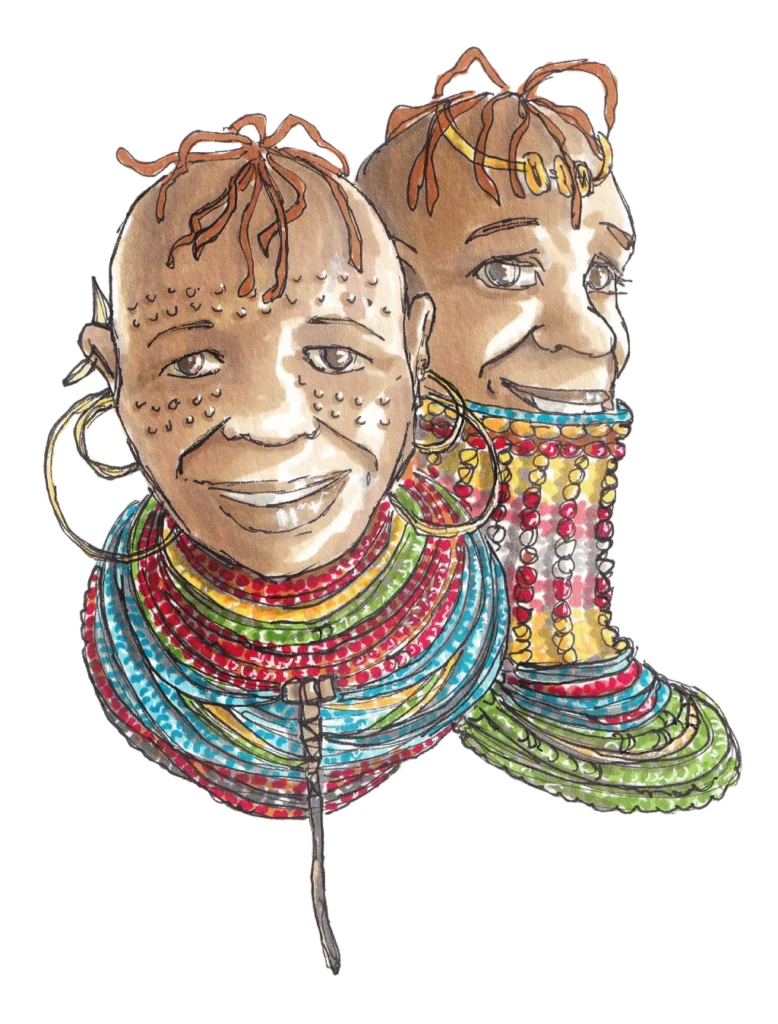
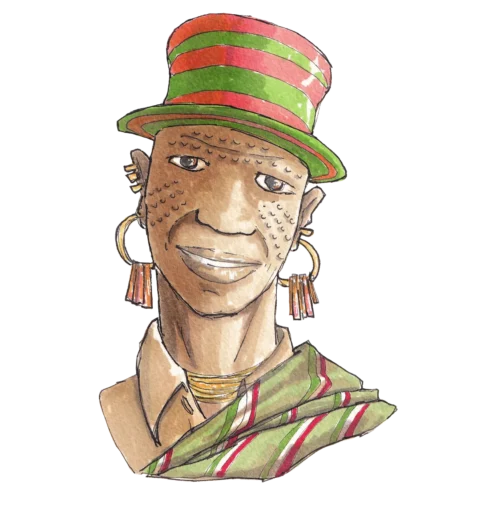
    Body ornamentation plays a significant role in Turkana culture. Men adorn their heads with intricate clay helmets adorned with hair, mud, and feathers, worn during important ceremonies. They also practice body scarification to communicate their social status, and it is common to see them carry a handheld stool and a small knife called “Akumwae.” Although lip piercing, known as “Ekale,” has fallen out of use in modern times.

    Turkana warriors, in addition to adornments, undergo scarification on their arms to indicate how many enemy victims they have wounded or killed. As a show of bravery and strength, they wore ostrich feathers on their heads when they defeated an enemy.

    Female aesthetics among the Turkana are equally distinctive. Women adorn their shaved heads with small central crests decorated with elaborate braids, creating a unique and easily recognizable style. Colourful and eye-catching necklaces, brass earrings, and bracelets on wrists and ankles, all made from similar materials, complete their attire, reflecting their vanity and beauty.

    Turkana culture is rich in traditions and artistic expressions that reflect their unique identity and a strong sense of community.

    April 12, 2024
  • Karamojong

    The Karamojong, also known as Karimojong, are a Nilotic ethnic group primarily residing in northern and eastern Uganda, specifically in the districts of Kotido and Moroto in the northeastern region of the country. These communities also inhabit areas surrounding Mount Elgon and the current Kidepo Valley National Park, sharing borders with neighbouring groups such as the Turkana and the Ik.

    In addition to occupying the southern part of the Karamoja region in northeastern Uganda, which covers approximately one-tenth of the country, the Karamojong have a significant presence in the vicinity of Mount Elgon and other adjacent areas. The Karamoja region is known for its arid climate and semi-arid landscapes, which have shaped the way of life of the communities that inhabit it.

    The Karamojong language, known as Karamojong or Karimojong, is part of the Nilo-Saharan language group. Besides pastoralism, which forms the backbone of their economy and subsistence, the Karamojong also practice agriculture in the few fertile areas, cultivating crops such as sorghum, maize, and millet.

    Traditional Karamojong life revolves around their livestock, which is important in their culture and daily lives. The animals are valued for their meat and milk and as symbols of wealth and social status. Pastoral nomadism is a common practice among the Karamojong, who take their herds to graze in more fertile lands during the rainy season and return to their home areas during the dry season.

    According to anthropological studies, the Karamojong can be traced back to a group that migrated from present-day Ethiopia around 1600 AD. This migration led to two main branches: the Kalenjin and the Maasai groups, which split up and dispersed in different directions.

    The Ateker branch, which includes the Karamojong, settled in the west, dividing into subgroups such as the Turkana in Kenya, the Iteso, the Dodoth, the Jie, and the Kumam in Uganda, and the Jie and Toposa in South Sudan. These groups, known as the “Teso Cluster” or “Karamojong Cluster,” share a common origin and migration history.

    Regarding their religious beliefs, the Karamojong have integrated Christianity with their ancestral animistic beliefs. Although Christianity has influenced their culture, they maintain animistic and polytheistic practices rooted in their daily lives and ceremonial celebrations. These beliefs make the Karamojong a fascinating and culturally diverse community in Uganda, as do their pastoral lifestyle and rich history.

    April 12, 2024
Previous Page
1 … 3 4 5

Collaborators

Muafrika

Travel agency in Africa

agencias@muafrika.travel

  • Facebook
  • Instagram

Destinations

  • Uganda
  • Rwanda

Travel

  • Umoja

  • Safari Twende

  • Safari Twiga

  • Safari Mzuli

  • Safari Bakiga

  • group

  • in private

  • photo safari

Muafrika 2026

  • Legal Notice
  • Privacy Policy

Notifications