Skip to content
  • ACCESS TO PROFESSIONALS

    • English
      • Español
  • Uganda
  • Rwanda
  • Tours
  • Muafrika
  • Agencies
  • About us
  • Contact
  • Lake Bunyonyi

    Lake Bunyonyi

    Lake Bunyonyi, whose name translates to “place of little birds,” alludes to the abundance of avifauna that characterizes it. This freshwater lake of volcanic origin is situated in southeastern Uganda, between the cities of Kisoro to the west and Kabale to the east, on the route towards the border with Rwanda. It is a natural gem that offers a unique experience.

    Bunyonyi is considered one of Africa’s deepest lakes, with points reaching depths up to 900 meters. It is part of the Albertine Rift Valley, which formed around 8,000 years ago.
    Its waters, mainly sourced from the Kabirita River in Rwanda, cover considerable dimensions of approximately 60 square kilometres, with a length of about 25 kilometres and a width of 7 kilometres. The lake is dotted with about 29 islands, and its crystal-clear waters host a rich diversity of aquatic life, including carp, catfish, American crayfish, otters, and many birds such as crowned cranes and swallows.

    Bunyonyi is an oasis of tranquillity and safety, perfect for enjoying a refreshing swim.
    The absence of dangerous animals and the bilharzia parasite, common in other African lakes, make it an ideal destination to unwind after an exciting day of gorilla trekking in Bwindi or Kisoro. Immersing oneself in its waters while listening to the sweet song of birds creates an idyllic and serene environment, perfect for disconnecting and enjoying nature in its purest form.

    April 15, 2024
  • Kasese

    Kasese

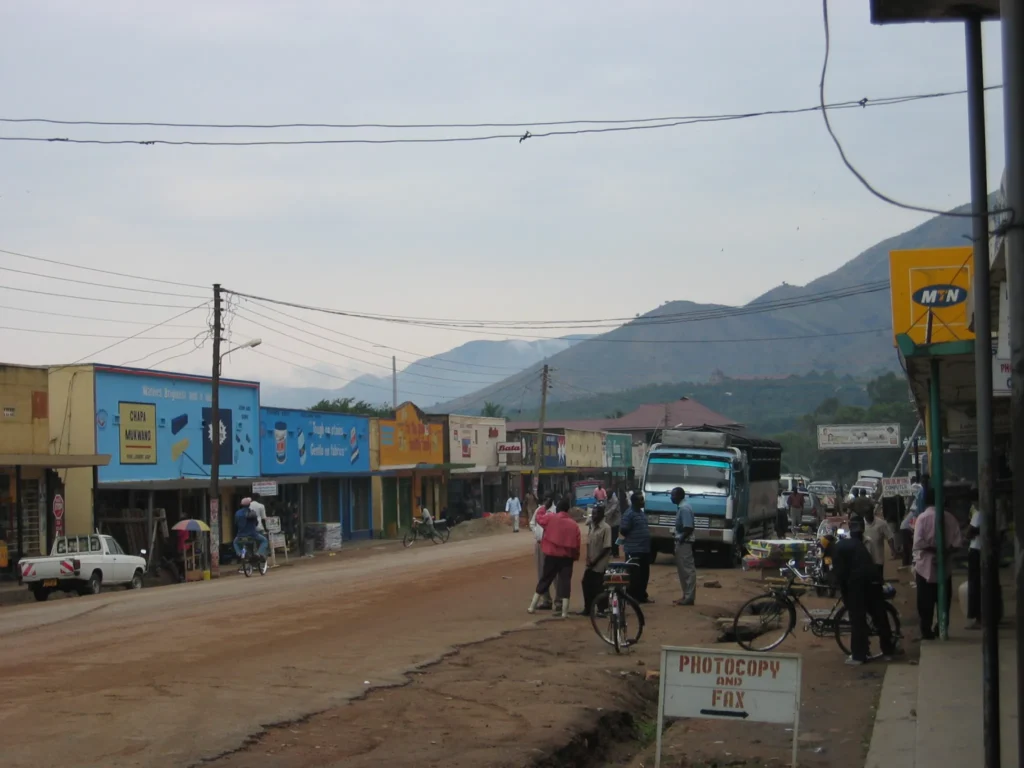
    Kasese, nestled in the heart of western Uganda, serves as the gateway to two of the country’s most renowned national parks: Queen Elizabeth National Park and Rwenzori National Park. Kasese is located east of the magnificent Rwenzori Mountains and north of Lake George, 290 kilometres from Kampala, the nation’s capital. Furthermore, it lies 40 km northeast of the international border between Uganda and the Democratic Republic of Congo (DRC), making it an ideal stopover for travellers embarking on cross-border adventures.

    By Karamell – Own work, CC BY-SA 3.0, https___commons.wikimedia.org_w_index.php_curid=1978002

    Kasese, rich in natural beauty and cultural heritage, offers many attractions and activities for visitors to explore. Nature enthusiasts will be drawn to the diverse landscapes of Queen Elizabeth National Park, home to iconic African wildlife such as elephants, lions, and hippos, as well as the breathtaking scenery of the Rwenzori Mountains. Meanwhile, adventure seekers can embark on exhilarating treks through the rugged terrain of Rwenzori National Park, where they can marvel at cascading waterfalls, lush forests, and snow-capped peaks.

    In addition to its natural wonders, Kasese boasts a vibrant local culture and history waiting to be discovered. Visitors can immerse themselves in the bustling markets, sample local delicacies, and shop for handmade crafts and souvenirs. They can also explore the town’s rich cultural heritage through visits to historical sites and museums, gaining insight into the region’s fascinating past and traditions.

    Whether you’re a nature lover, an adventure enthusiast, or a cultural explorer, Kasese offers something for everyone. With its strategic location, stunning landscapes, and warm hospitality, it’s no wonder that Kasese is considered a must-visit destination in Uganda.

    April 15, 2024
  • Kabale

    Kabale

    Kabale, aptly named after the term in the local Rukiga language meaning “a small stone,” is a charming enclave located in the eponymous district, about 150 km south of Mbarara, the largest city in the western region of Uganda.

    Kabale is much more than its name suggests.
    It is a cultural and geographical meeting point where history blends with natural beauty. Surrounded by rolling hills and fertile valleys, this city stands out as a must-visit destination for travellers exploring Uganda.

    Its strategic location makes it an important stopover for those travelling to the border with Rwanda, where they can immerse themselves in the vibrant culture of this neighbouring country. Additionally, for nature lovers, Kabale serves as a gateway to natural gems like the stunning Lake Bunyonyi, known as the “Pearl of Africa,” with its calm waters and green islands dotted with rustic cabins.

    For thrill-seeking adventurers, Kabale is the perfect starting point for exploring the famous Bwindi Impenetrable National Park, home to endangered mountain gorillas. Here, visitors have the unique opportunity to have exciting face-to-face encounters with these magnificent primates, an experience that leaves an indelible mark on the memory.

    On the other hand, those interested in wildlife diversity can head to the nearby Queen Elizabeth National Park, where they will find an incredible variety of species, from elephants and lions to a wide variety of exotic birds.

    As for the city itself, Kabale offers a captivating blend of cultural influences, from colonial architecture to vibrant local markets where locals sell their fresh produce and crafts. Visitors can immerse themselves in the city’s daily life, explore its lively streets, and enjoy the hospitality of its people.

    In summary, Kabale is much more than a “small stone.” It is a destination full of charm, history, and natural beauty, offering something for everyone and adventures for those who dare to discover it.

    April 15, 2024
  • Gulu

    Gulu

    Gulu is an important city located in the northern region of Uganda, about 340 kilometres from Kampala.

    It serves as the administrative and commercial centre of Gulu District, surrounded by Nwoya District to the southwest, Amuru District to the west, Lamwo District to the northwest, Lira District to the southeast, Pader District to the east, and Oyam District to the south. Originally part of Acholi District, Gulu became its district after the division of Acholi, with West Acholi becoming Gulu District and Kitgum District.

    By Alemeneghini – Own work, CC BY-SA 4.0,

    The economy of Gulu is primarily based on agriculture, with crops such as sesame, potatoes, sunflower, cassava, beans, and nuts, as well as commercial crops like cotton, tobacco, coffee, and sorghum.

    During Muafrika Expeditions’ trips to northern Uganda, we often make a stop in Gulu. We not only spend the night there but also visit the local market, especially on trips where we explore the ethnic groups in the Karamoja area, as it is a good place to stock up on supplies for our interactions with those communities.

    April 15, 2024
  • Fort Portal

    Fort Portal

    Fort Portal is one of Uganda’s most popular cities. It is located in the Kabarole district of the kingdom of Tooro. It lies at the foothills of the Rwenzori Mountains (with a maximum height of 5019 m), 50 km from Queen Elizabeth National Park, and about 30 km from Kibale National Park.

    To reach Fort Portal, you can take two routes from Entebbe or Kampala. One is via Mityana, with a travel time of approximately 5 hours. The other route is through Mbarara, the largest city in western Uganda, although this option takes about 8 hours by road due to the distance.

    Fort Portal serves as the epicentre of the Tooro kingdom and is home to the Toro king’s palace. It is the only city with an English name, as it was named during the 1960s during the British protectorate.

    The city has become popular due to its proximity to important tourist attractions. For example, Kibale National Park is famous for chimpanzee trekking and 12 other primate species. In addition to the area’s craters, waterfalls, and caves, Kibale stands out for chimpanzee tracking and visits to Bigodi Sanctuary.

    Fort Portal also serves as a gateway for mountaineers wishing to climb Rwenzori, whose views can be enjoyed from various points in the city. Queen Elizabeth National Park is only 3 or 4 hours away, while Semuliki National Park is approximately 3 hours away.

    On the routes organized by Muafrika Expeditions in Uganda, we always stop at Fort Portal. Even if no visits are scheduled, it is a must-visit destination and an essential stopover, whether on the way to Queen Elizabeth or in the opposite direction towards Murchison Falls.

    April 15, 2024
  • Jinja

    Jinja

    Jinja is one of Uganda’s most well-known and visited cities. Located in the eastern part of the country, it is about a 2-3 hour drive from Kampala, provided that the heavy traffic between Mukono and the outskirts of Kampala allows it.

    Historically, Jinja was the most industrialized city due to the hydroelectric dam along the Nile River.
    However, following the expulsion of Asians in the late 1970s by Ugandan dictator Idi Amin Dada, the city’s economy took a significant hit. The inefficient management of industries by Ugandans who replaced the Asians contributed to the economic decline, and Jinja has never fully recovered its former industrial glory.

    On the other hand, other cities benefited from the supply of hydroelectric power. Examples include Kampala, the capital, and the Mbarara district, currently the country’s main industrial centres.

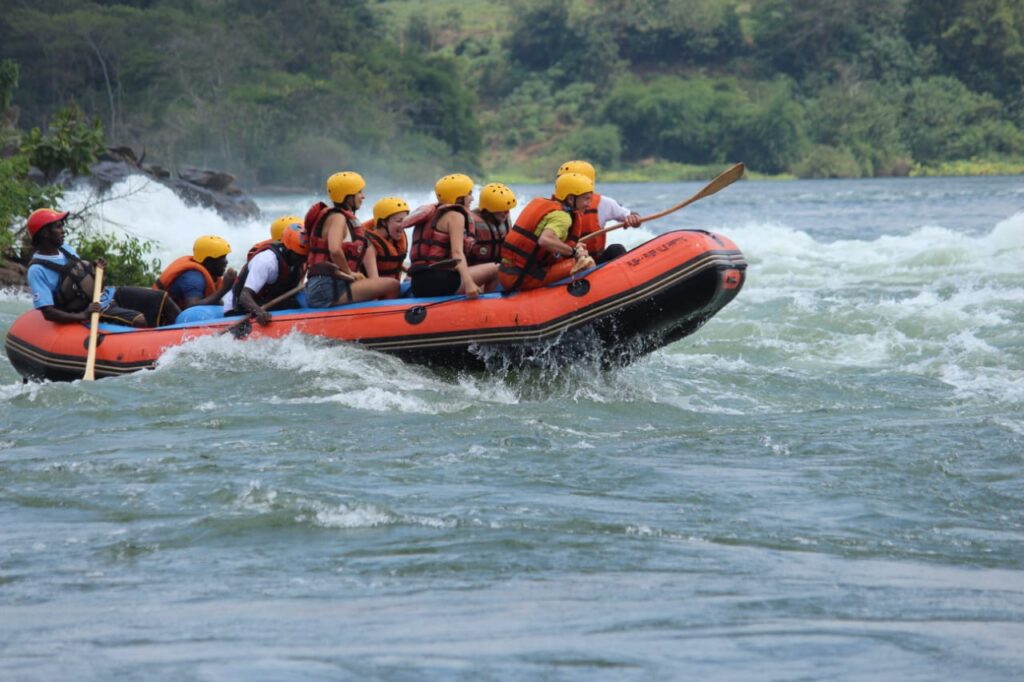
    In some of our tours, we include visits to Jinja, where travellers can see the source of the White Nile and enjoy thrilling rafting on the river’s rapids. We also enjoy introducing our clients to “Petits Detalls,” a charitable initiative that we actively support. This project is located near Jinja, specifically in the town of Iganga.

    April 15, 2024
  • Entebbe

    Entebbe

    Entebbe, the gateway to Uganda for travellers arriving by air, is located about 37 km from Kampala, on a peninsula on Lake Victoria. Entebbe means “seat” in Luganda, possibly from the Baganda chief’s custom of presiding over court cases from that location. During British colonial rule and before independence in 1962, it served as the seat of government.

    By https___www.flickr.com_photos_123835587@N04_ – https___www.flickr.com_photos_123835587@N04_26510178186_, CC BY 2.0, https://commons.wikimedia.org/w/index.php?curid=55272706

    Entebbe is a tranquil and charming destination that offers various interesting activities. You can search for the shoebill or whale head on Mbamba Island, explore craft markets for unique shopping experiences, or visit Kasenyi, a picturesque fishing village. It also boasts a magnificent colonial-era botanical garden, a sanctuary for birds and some small primates, and beaches along the serene lakeshore. It’s a peaceful yet enchanting place with a very welcoming local atmosphere.

    Muafrika Expeditions has its operations base and offices in the Kasenyi area, on the outskirts of Entebbe city.

    April 15, 2024
  • Kampala

    Kampala

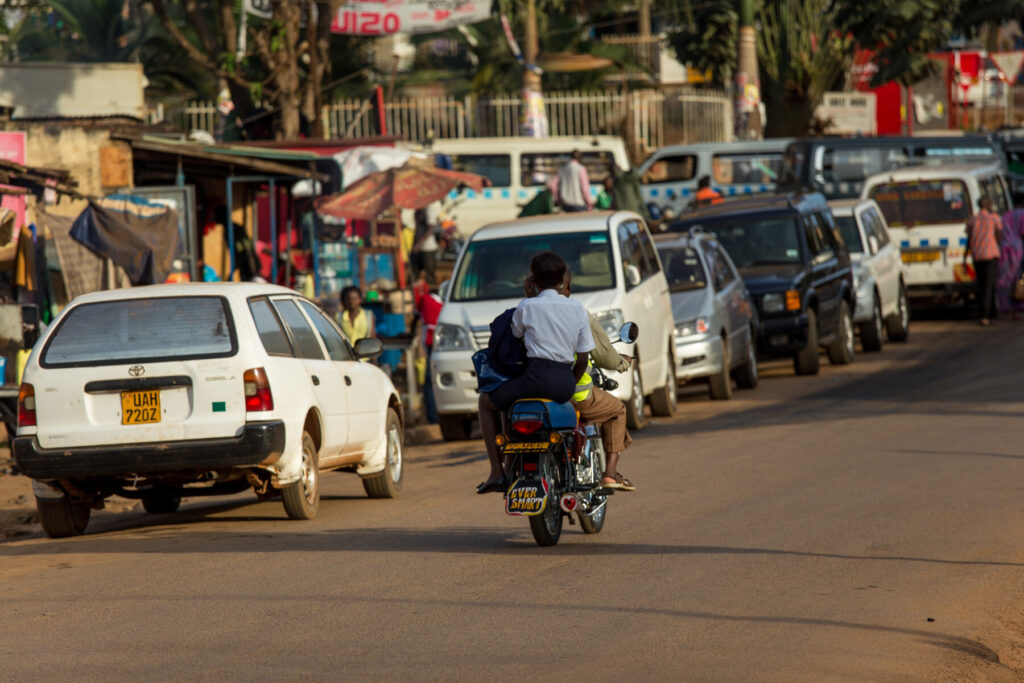
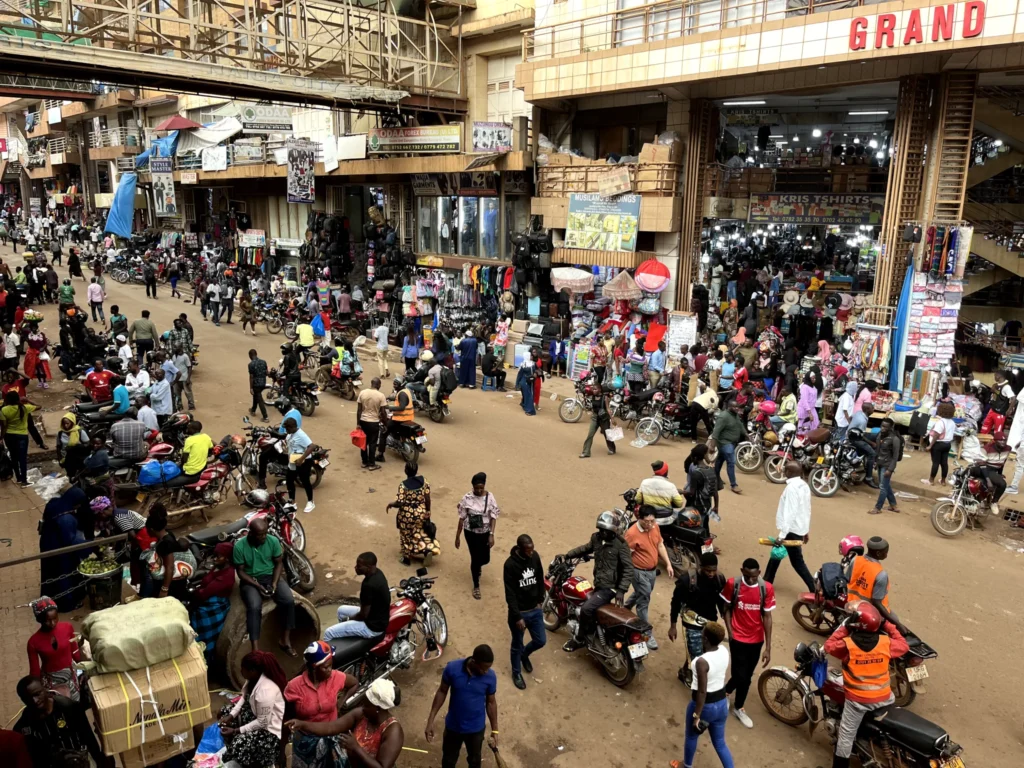
    Kampala, the bustling capital of Uganda, nestled between hills and Lake Victoria, is a city immersed in authentic traffic chaos, with exaggerated jams and a sense of traffic disorder, with cars stuck for hours and streams of thousands of “boda-bodas,” motorcycle taxis used to transport people and goods.

    With more than 1.2 million inhabitants, Kampala—once the royal residence of the Buganda Kingdom—contributes to the gridlock in the city’s traffic.

    The city’s main points of interest are scattered throughout rather than concentrated in a historic centre like many other major cities:

    Mengo Palace:

    The historic Baganda king’s home, Mengo Palace, also called Lubiri, was constructed in 1885. During Idi Amin’s 1966 coup, it was used to imprison political prisoners in its underground tunnels. In recent years, it has undergone restoration of its original façade.

    Nakasero Market:

    A must-visit during any city tour, Nakasero Market has been one of Kampala’s most important and popular commercial hubs since 1895. It’s a vibrant market with an outdoor section offering fresh produce like vegetables and fruits and an indoor area selling clothing and machinery.

    Kasubi Tombs:

    Built on Kasubi Hill in 1882, the Kasubi Tombs are the burial grounds of the last four Buganda kings (Mutesa I, Mwanga II, Cwa, and Mutesa II). Designated a UNESCO World Heritage Site in 2010, they hold significant cultural and spiritual value, especially after a fire nearly destroyed them.

    Uganda National Mosque:

    Possibly the country’s most important architectural religious site, located on Kampala Hill, the Uganda National Mosque accommodates Uganda’s Muslim population with a capacity for 35,000 worshippers. Completed in 2006, it was originally known as the Gaddafi National Mosque. Visitors can enjoy panoramic views from its 65-meter-high minaret.

    Uganda Museum:

    Considered one of the best museums in East Africa, the Uganda Museum boasts a vast collection showcasing history, culture, science, archaeology, and natural history. Founded in 1908, it’s a must-visit attraction in the city. Highlights include collections of traditional musical instruments, fossils of the extinct Napak rhinoceros dating back eight million years, and a recreation of a village with traditional houses representing various Ugandan tribes.

    April 15, 2024
  • Ik

    The Ik, formerly a nomadic tribe of hunter-gatherers, also known disparagingly by other ethnic groups as Teuso, constitute an ethnic group of around 10,000 people. Their common language is part of a sub-group of Kuliak, completely discordant with Nilotic-Saharan languages.

    Located in the Morungole Mountains in northeastern Uganda, near the border with Kenya, the Ik used to move regularly in annual cycles between the Didinga Hills in South Sudan, the Kidepo Valley in Uganda, Lake Turkana, and the Zingout Hills in Kenya. These nomadic movements had a clear and measured purpose, allowing them to utilize natural resources without depleting them. However, the arrival of the protection of Kidepo National Park forced the Ik to move to Mount Morungole, where they were forced to adapt and become subsistence farmers in the mountains. This drastic change has resulted in extreme famine and has left the Ik vulnerable to constant attacks by other tribes in the area.

    Ik communities are organized into small villages, each walled by an outer wall and subdivided into family or friendship neighbourhoods called “Odokis.” Each neighbourhood is divided into walled households known as “peaks,” which have courtyards and, in some cases, granaries. Although they are currently primarily engaged in subsistence agriculture, grinding their grain, only a small number of Ik individuals inhabit the peaks of the Morungole Mountains in the Rift Valley, on the border with Kenya and Sudan.

    It is believed that the Ik originated from a larger group of Kuliak-speaking people who migrated from Ethiopian lands or even farther north, possibly Egypt. Upon arriving in East Africa, the Ik settled in the Kidepo Valley, where they hunted and fed freely until being expelled to protect the park’s fauna.

    Kidepo is flanked to the west by Dodoth Karamojong villages and to the east by Turkana from Kenya. As a result, the Ik are being driven deeper and deeper into the mountains. Constant attacks and looting by the Karamojong and Turkana, who consider them “Teuso” (poor people without cattle or weapons), have left the Ik in a situation of insecurity, famine, and thirst. They also do not have any political representation or official recognition from the Ugandan government. The Ik do not raise cattle for fear of theft and attacks, exacerbating the food scarcity.

    The Ik language, known as Icetot, is a Nilotic-origin language that is not understood or spoken in surrounding areas, contributing to the isolation of the Ik from other neighbouring groups.

    The Ik are currently the most abandoned and forgotten ethnicity in Uganda. Even when some Ik leaders travelled to Kampala to make political demands, they failed to defend their interests, while Karamojong leaders manipulated the discussions to their advantage.

    April 12, 2024
  • Batwa

    The Batwa people, a group belonging to the “Pygmies,” are a set of hunter-gatherer communities inhabiting the equatorial forests of Africa. Their small stature and innate propensity to engage in only intrapersonal interactions define them. Based on DNA evidence, the Pygmies, along with the San people (also called Bushmen), are among the oldest human populations in Africa, having lived there for about 70,000 years.

    Originally from the Rwandan lands, the Batwa have faced numerous challenges throughout history. The arrival and dominance of the Hutu people, of Bantu origin, significantly reduced their population. The Batwa were again conquered by the Nilotic-born Tutsis from Ethiopia. Consistently marginalized and discriminated against, they have even lacked ethnic recognition from the governments of Uganda and Rwanda.

    Traditionally, the Batwa lived as hunter-gatherers in the forest. However, with the protection of endangered gorillas and the prohibition of poaching in Uganda and Rwanda, they have been displaced from their forest settlements. While this measure aims to preserve biodiversity, it has endangered the survival of their culture and ancestral way of life.

    Condemned for abandoning their traditional way of life, many Batwa have been forced to subsist through agriculture and pottery. Some have succumbed to despair, selling themselves for a small sum of money to acquire alcohol and cigarettes. This spiral of degradation represents a sad ending for people who, as expert forest dwellers, have become a shadow of their former greatness.

    April 12, 2024
Previous Page
1 2 3 4 5
Next Page

Collaborators

Muafrika

Travel agency in Africa

agencias@muafrika.travel

  • Facebook
  • Instagram

Destinations

  • Uganda
  • Rwanda

Travel

  • Umoja

  • Safari Twende

  • Safari Twiga

  • Safari Mzuli

  • Safari Bakiga

  • group

  • in private

  • photo safari

Muafrika 2026

  • Legal Notice
  • Privacy Policy

Notifications