Skip to content
  • ACCESS TO PROFESSIONALS

    • English
      • Español
  • Uganda
  • Rwanda
  • Tours
  • Muafrika
  • Agencies
  • About us
  • Contact
  • Queen Elizabeth National Park

    Queen Elizabeth National Park

    Queen Elizabeth National Park is one of Uganda’s most popular destinations. It is in the Albertine Rift Valley, near the majestic Rwenzori Mountains, and covers an area of approximately 1980 square kilometres. The park encompasses diverse habitats, including savannas, tropical forests, and wetlands.
    The park bears the name of Queen Elizabeth II of England, who visited the area and was mesmerized by the beauty of the surrounding landscapes. The park was formerly known as Kazinga National Park, named after the Kazinga Channel, which continues to be a popular tourist destination in the park.

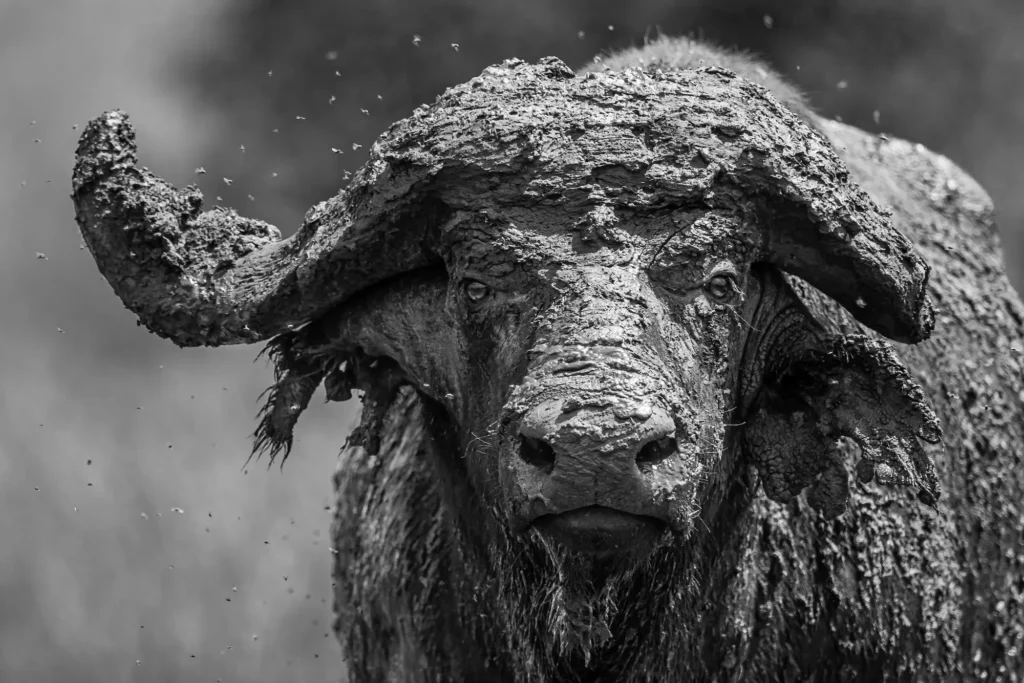
    Queen Elizabeth National Park is home to an incredible array of wildlife, with over 600 species of birds, including various types of bee-eaters, 11 species of kingfishers, flamingos, raptors, falcons, and even the elusive shoebill. It also hosts populations of hippos, elephants, lions, leopards, buffaloes, Ugandan kobs, gazelles, and 10 species of primates.

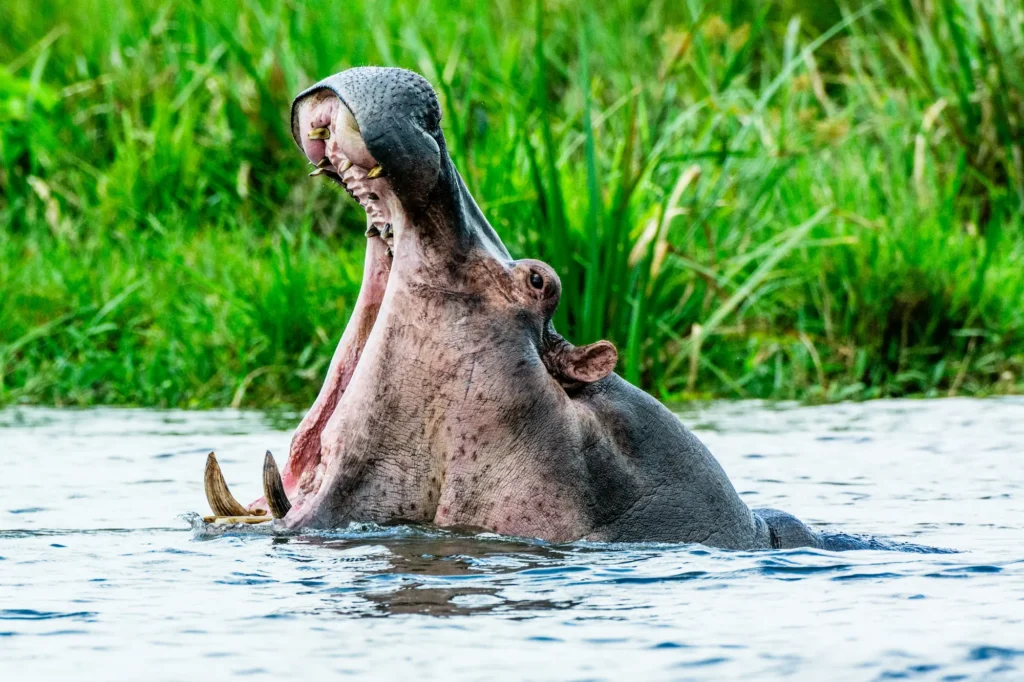
    The best way to experience the park is by boat along the 40-kilometer Kazinga Channel, which connects Lake Edward and Lake George. There are land safaris available in places like Kasenyi and the Mweya Peninsula. Departing from the Mweya Peninsula, these boat trips offer sightings of abundant wildlife congregating along the channel. With one of the world’s largest concentrations of hippos, elephants, crocodiles, antelopes, fish eagles, and multiple bird species, exploring the Kazinga Channel is a quintessential experience for any visitor to Uganda, leaving indelible memories.

    About a three-hour drive from the Mweya Peninsula lies the Ishasha sector, renowned for its tree-climbing lions. While Ishasha is part of Queen Elizabeth National Park, it deserves special mention due to its uniqueness, almost warranting consideration as a separate park within the larger reserve.

    April 22, 2024
  • Kazinga Channel

    Kazinga Channel

    The Kazinga Channel stretches about 40 kilometres, connecting Lake Edward on the western side to Lake George on the eastern side. Lake Edward is fed by several streams originating from the Rwenzori Mountains, and its waters flow through the Kazinga Channel to Lake Edward.

    The Kazinga Channel is an idyllic spot teeming with wildlife, from large concentrations of hippos to elephants, crocodiles, antelopes, fish eagles, and a myriad of bird species, making a journey along the Kazinga Channel one of the most iconic experiences for anyone visiting Uganda. Memories of this marvellous channel remain etched in the traveller’s mind forever. Nature at its purest!

    The boat safari along the channel offers two daily excursions, one at 3:00 PM and another at 5:00 PM. This is undoubtedly one of the highlights of any trip to Uganda and Queen Elizabeth National Park. Boats can be boarded at the Mweya Peninsula, right along the channel, very close to the Mweya Safari Lodge, which boasts extraordinary views of the channel.

    Before reaching the eastern end of the channel, where it meets Lake George, you’ll encounter a fishing village and witness the lives of fishermen along the channel’s banks. It’s common to see them fishing from their boats, seemingly oblivious to the presence of hippos and other potential dangers.

    April 22, 2024
  • Kibale National Park

    Kibale National Park

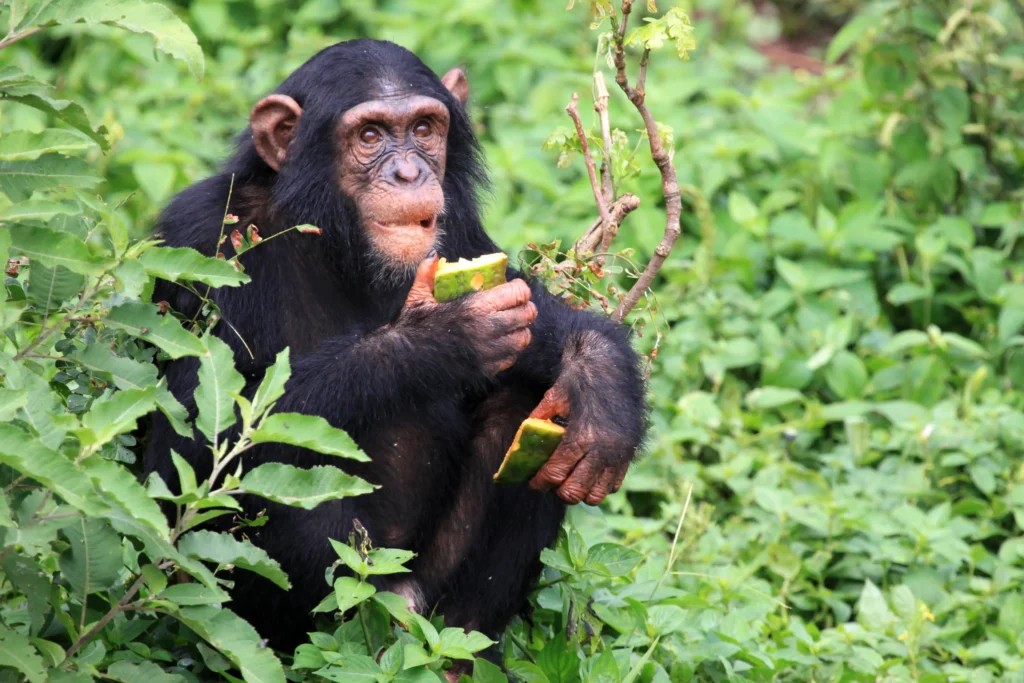
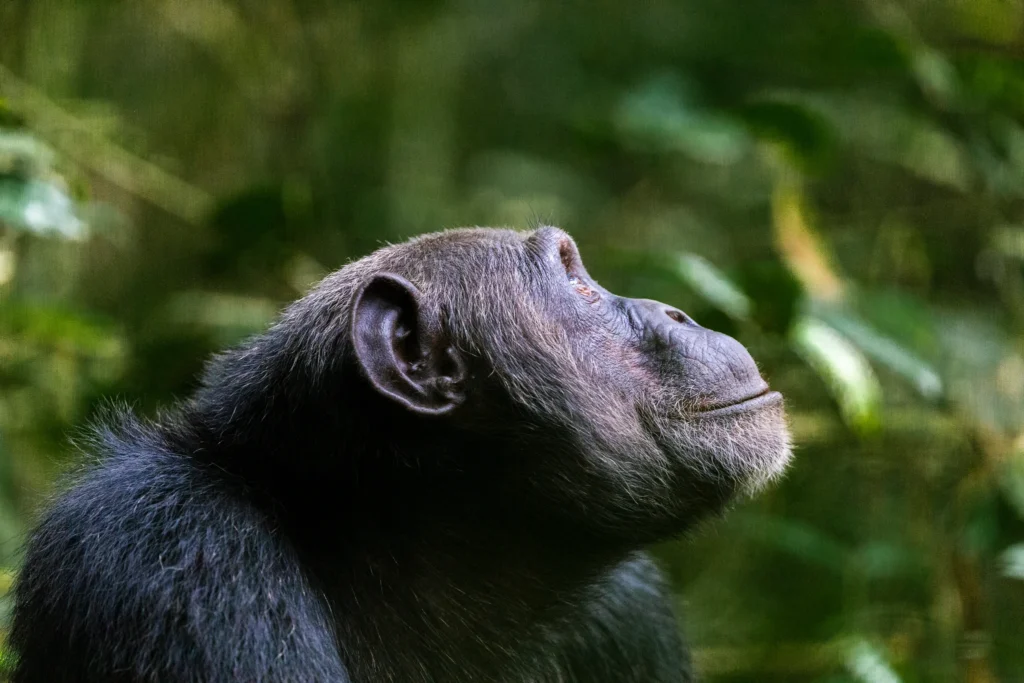
    Kibale National Park is renowned as the premier destination in the country for chimpanzee tracking. However, chimpanzees can also be found in Budongo, Kalinzu, Kyambura Gorge, and at the Ngamba Island Chimpanzee Sanctuary, nestled in the heart of Lake Victoria.

    Covering an area of 795 square kilometres, Kibale National Park boasts a diverse and stunning tropical forest that rises to an elevation of 1590 meters above sea level. Within this habitat, up to 13 primate species coexist, with chimpanzees being the star attraction, estimated at around 1500 individuals, making it the prime location for their tracking.

    In addition to chimpanzees, the park is home to populations of other species such as L’Hoest’s monkeys, red colobus monkeys, black and white colobus monkeys, red-tailed monkeys, blue monkeys, olive baboons, and grey-cheeked mangabeys, as well as galagos and pottos. Although more elusive, visitors may also encounter buffaloes, leopards, forest elephants, and duikers, along with various amphibians and reptiles.

    Kibale is a haven for bird enthusiasts, boasting 325 different bird species, including 6 that are endemic to the Albertine Rift Valley. Notable species include the dark-capped crimsonwing, black-capped apalis, blue-headed sunbird, collared apalis, red-faced woodland warbler, and purple-breasted sunbird. Specialties within the park include the green-breasted pitta, African pitta, black bee-eater, Abyssinian thrush, yellow-spotted nicator, little greenbul, black-eared ground thrush, yellow-throated tinkerbird, blue-breasted kingfisher, and the majestic crowned eagle.

    Chimpanzee tracking is a highlight activity for park visitors. It is conducted from the Kanyanchu Visitor Center with two daily departures, at 8:00 in the morning and 3:00 in the afternoon. Each tracking group consists of a maximum of 6 people, and the activity lasts 2 to 3 hours.

    April 22, 2024
  • Budongo Forest Reserve

    Budongo Forest Reserve

    Established in 1990, Budongo Forest Reserve is dedicated to research and conservation, focusing on scientific inquiry into primate behaviour and tropical forest ecology. These studies serve to inform conservation policies and sustainable resource management practices.

    Located south of Murchison Falls National Park and near Masindi city, Budongo is a 435-square-kilometre expanse of tropical rainforest nestled within the Albertine Rift. Notably, the reserve is abundant in East African mahogany trees, towering giants that can reach over 80 meters in height with trunk widths exceeding 20 meters.

    Budongo is renowned as one of Uganda’s prime habitats for chimpanzees. It hosts a diverse array of wildlife, including over 360 bird species, 465 types of trees, and 24 mammal species, nine of which are primates. Additionally, the reserve boasts approximately 290 species of butterflies and 130 species of moths.

    Due to its significant chimpanzee population, Budongo has become a popular destination for chimpanzee tracking. Though it may not be as well-known as Kalinzu Forest Reserve or Kibale National Park, Budongo provides plenty of chances for productive primate interactions and wildlife observation.

    April 22, 2024
  • Murchison Falls National Park

    Murchison Falls National Park

    Murchison Falls National Park, undoubtedly one of the country’s best and most beautiful parks, is where you can see the most animals. It is located within the Murchison Conservation Area, where we can also find the Bugungu and Karuma reserves. It is also the largest of all Ugandan parks, with more than 7,000 hectares.

    Murchison Falls is home to over 76 species of mammals, including up to four members of the distinguished and popular Big 5 club. Except for the rhino, which can only be seen in the Ziwa Game Reserve, Murchison is home to lions, leopards, elephants, and buffalo.

    It is also home to other species such as Uganda kob, waterbucks, Jackson’s elk, hyenas, warthogs, bushbucks, baboons, and other primates. . Particularly noteworthy are the large herds of Rothschild’s giraffe and elephants, which can sometimes number in the hundreds. More than 450 species of birds have been recorded in the park, including the rare and elusive shoebill.

    Importantly, Murchison is home to as many as 23 species endemic to the Albertine Rift, given its location on the eastern side of the Rift Valley.

    Murchison Falls National Park is divided in two by one of the branches of the Nile. The north bank is where all the safaris take place and is an area of savannah dotted with a beautiful landscape of palm trees. On the south bank is an area of fairly inaccessible riverine forest.

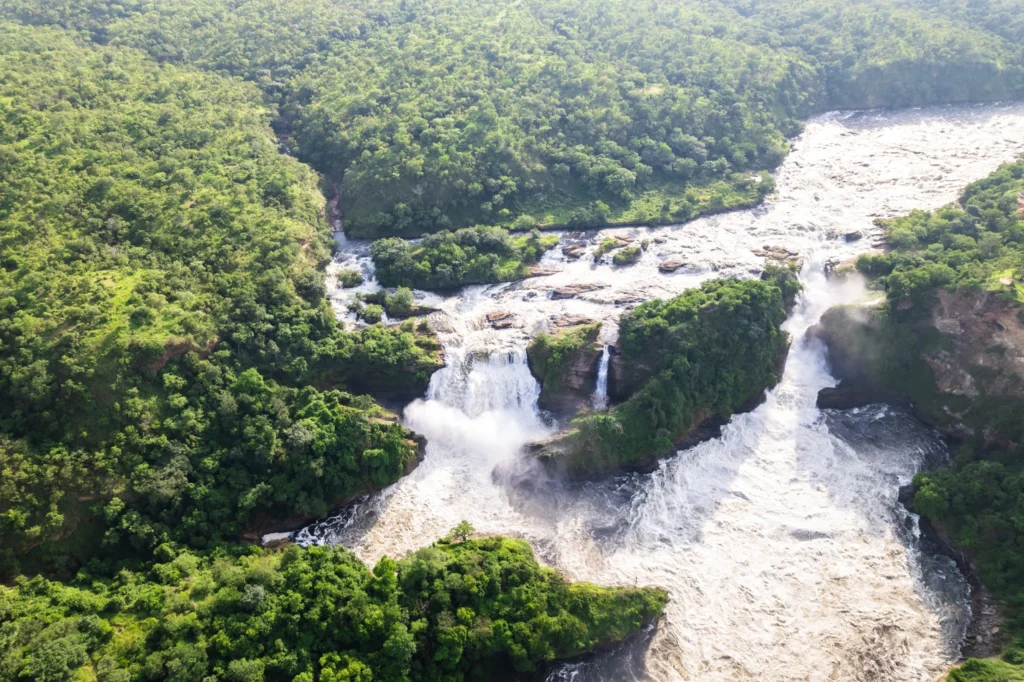
    One of the main activities that can be done inside the park is the safaris in 4×4 vehicles, which are always done on the north bank of the park. Another important activity is the boat safari, which takes place up this branch of the Nile, where you can see hippos, crocodiles, buffaloes, and waterfowl. On arriving at the so-called Devil’s Caldera, we come face-to-face with the more-than-popular Murchison Falls, known for being one of the most powerful waterfalls on the planet. This mighty branch of the Nile is concentrated in a narrow gorge no wider than 8 metres and 43 metres high, giving rise to a spectacle that every visitor to Uganda should attend.

    April 22, 2024
  • Ziwa Rhino Sanctuary

    Ziwa Rhino Sanctuary

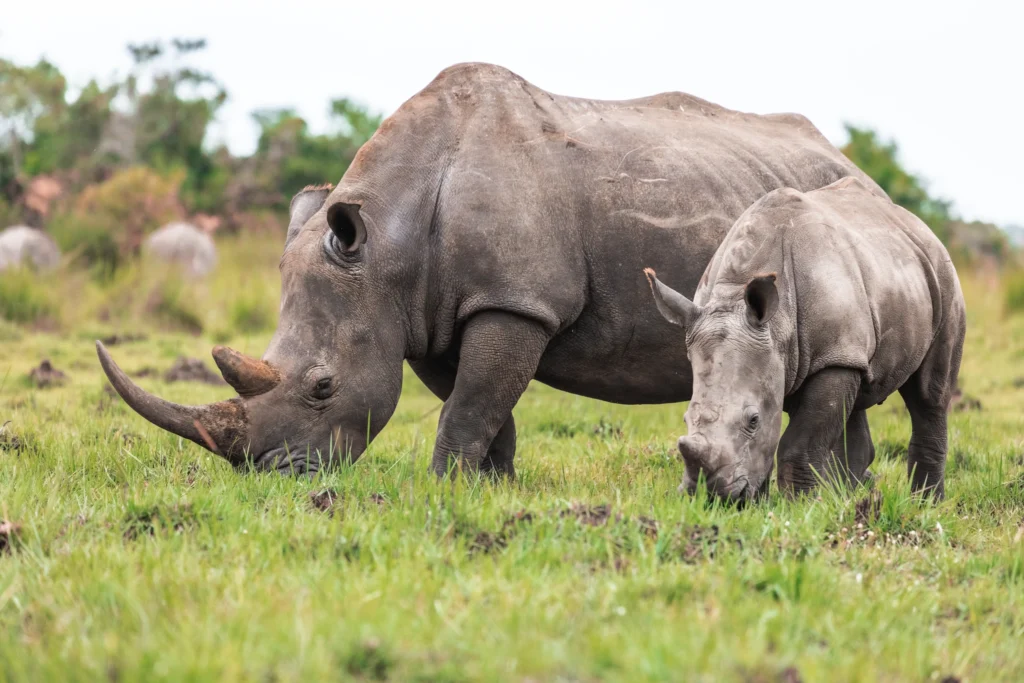
    Ziwa Rhino Sanctuary is home to Uganda’s only white rhinos. Located in Nakasongola district, this sanctuary houses these magnificent animals and provides refuge to many bird species and other wildlife. Ziwa has become a popular tourist destination and a must-visit for anyone exploring Uganda. Visitors can enjoy rhino-tracking walks, bird-watching excursions, nature hikes, and even nighttime canoe adventures to spot the mythical shoebill.

    History of Ziwa

    In the 1980s, rhinos completely disappeared from Uganda due to poaching, despite having roamed freely around Murchison Falls. Twenty years later, between 2001 and 2006, thanks to the tireless efforts of organizations and individuals, eight rhinos were reintroduced to the Ziwa Rhino Sanctuary. Since then, their population has been steadily increasing, and it now approaches forty individuals, leading prosperous lives and successfully reproducing.

    The rhinos at Ziwa belong to the Southern White Rhinoceros species. The Northern White Rhinos, which formerly roamed Ugandan territory, are thought to be critically endangered and extinct in the wild. It’s important to note the distinction between the white and black rhinos: the latter has a pointed upper lip as it feeds from trees and bushes, while the white rhino has a wide mouth for grazing like cows.

    Other Animals at Ziwa

    Aside from rhinos, Ziwa Rhino Sanctuary is home to other wildlife species. During a visit to Ziwa, visitors can spot numerous animals, such as the African leopard and the Ugandan kob, and over 300 bird species, including the majestic golden crested crane. Alongside the rhinos, one of the main attractions is the shoebill, an ancient bird species that has existed for at least 30 million years.

    April 22, 2024
  • Ssese Island

    Ssese Island

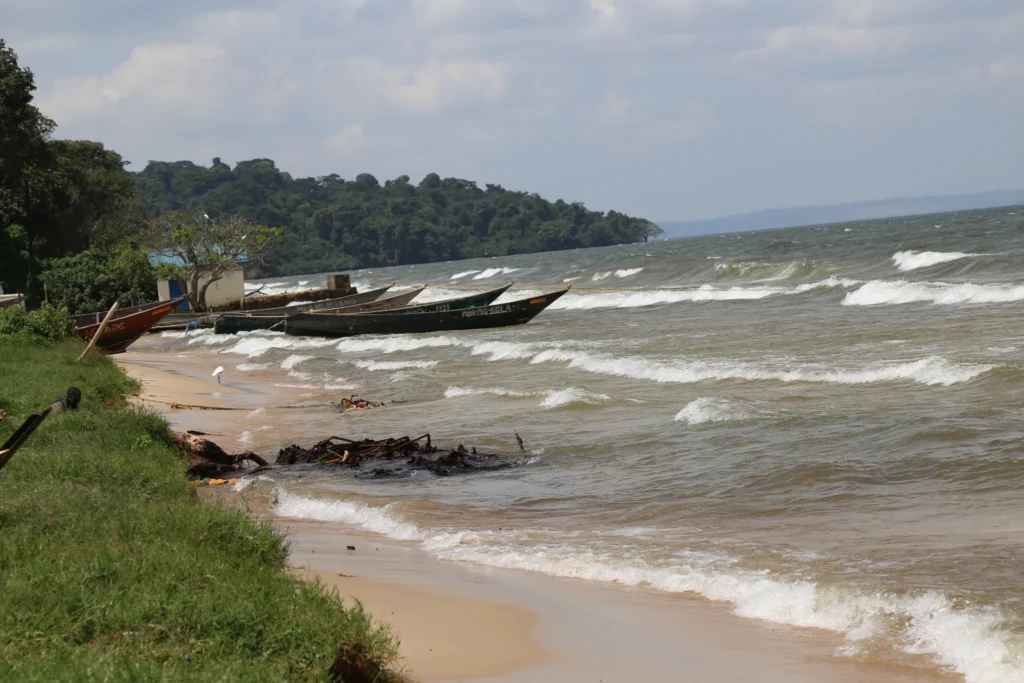
    The 84 islands comprising the Ssese archipelago are located in the northwestern part of Lake Victoria.
    These islands are well-known for their lush forests and pure freshwater beaches, which makes them the ideal location for a multi-day tropical vacation.

    By Jiame Josh – Own work, CC BY-SA 4.0

    There are plenty of recreational activities to enjoy while visiting the Ssese Islands, from boat rides and fishing to swimming and snorkelling. Furthermore, the variety of wildlife, including primates and abundant bird species, will appeal to nature and wildlife enthusiasts.

    From a cultural perspective, these islands are home to picturesque fishing villages where visitors can interact with the local population and savor delicious regional cuisine.

    Their cultural richness, stunning natural beauty, and activities make the Ssese Islands the perfect destination for unwinding for a few days. It is the ideal complement after exciting safaris and treks across the country.

    April 15, 2024
  • Mbarara

    Mbarara

    The city of Mbarara is the municipal centre of the homonymous district, located approximately 270 km southwest of the capital, Kampala. This district, bordering several other regions such as Ntungamo, Sembabule, Rakai, and Bushenyi, is part of the former kingdom of Ankole.

    Economically, Mbarara stands out as the primary hub for milk processing, being the largest supplier of this product to Kampala and the rest of the country. Many factories in the city are devoted to this purpose, contributing significantly to the country’s supply.

    Additionally, Mbarara features a domestic airport approximately 14 kilometres from the city and a 1.5-hour drive from Lake Mburo National Park.

    April 15, 2024
  • Mbale

    Mbale

    Mbale, situated in the eastern part of the country, serves as the gateway to the majestic Mount Elgon region, one of the most imposing volcanoes on the African continent.

    This city captivates not only with its spectacular landscape but also with its rich cultural heritage. Here, local markets offer a variety of crafts made by the Bagishu ethnic group, and the local cuisine is a true delight that must not be missed.

    In addition, Mbale is home to important historical and cultural sites, like Wanale Hill, which is revered as a holy site where, in local belief, ancestral spirits dwell. From the top of this hill, one can enjoy breathtaking panoramic views of the natural surroundings that envelop the city.

    Additionally, Mbale is the gateway to the breathtaking Sipi Falls and Mount Elgon National Park, both well-known for their amazing hikes and trekking experiences. These waterfalls, cascading in a succession of drops from the slopes of Mount Elgon, offer a breathtaking natural spectacle.

    In conclusion, Mbale is a lively, hospitable city that skillfully blends adventure, culture, and nature.

    April 15, 2024
  • Lake Victoria

    Lake Victoria

    Lake Victoria, also known as Lake Nyanza, Ukéréoué, Ukerewe, or Nalubaale, bathes the shores of three countries: Kenya to the northeast, Tanzania to the south, and Uganda to the northwest. It is considered the largest tropical lake in the world and the second-largest freshwater body on the planet. Located in East Africa, in the heart of the Great Lakes region, Lake Victoria is not particularly deep, with an average depth of about 40 meters. It is extensive, covering over 68,000 square kilometres. It is surrounded by two branches of the Great Rift Valley and sits in a depression created by tectonic activity.

    As one of the main sources of the Nile River, Lake Victoria feeds into Lake Albert, forming what is known as the White Nile. Despite its vastness, the lake harbours a rich diversity of tropical flora and fauna. Nonetheless, there are several threats to this biodiversity.

    Since the introduction of the invasive species of Nile perch in the 1960s, over two hundred fish species have disappeared from the lake The predatory nature of the Nile perch continues to endanger other species, leading to their gradual decline. Additionally, pollution from surrounding communities exacerbates the plight of endemic species. It is noteworthy that Lake Victoria is home to over thirty million people in rural areas along its shores in three countries, making it one of the most densely populated regions in the world.

    During the era of exploration, several expeditions sought the source of the Nile. Richard Francis Burton and John Hanning Speke are famous for discovering the Nile source in 1858 and the subsequent mapping of Lake Victoria. Speke, in particular, named the lake in honour of Queen Victoria of England.

    Lake Victoria boasts numerous islands in its waters, including Ukerewe, Ukara, Rubondo, Bumbire, Mfangano, Rusinga, Kome, and Bugala, as well as the Sese Archipelago in Uganda.

    April 15, 2024
Previous Page
1 2 3 4 5
Next Page

Collaborators

Muafrika

Travel agency in Africa

agencias@muafrika.travel

  • Facebook
  • Instagram

Destinations

  • Uganda
  • Rwanda

Travel

  • Umoja

  • Safari Twende

  • Safari Twiga

  • Safari Mzuli

  • Safari Bakiga

  • group

  • in private

  • photo safari

Muafrika 2026

  • Legal Notice
  • Privacy Policy

Notifications